
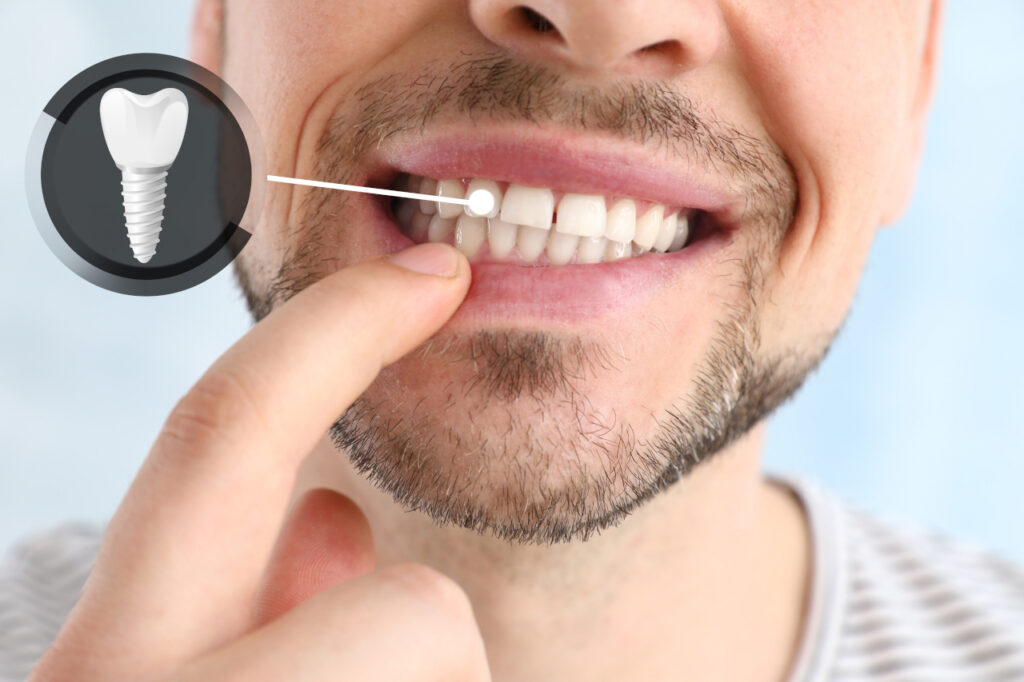
Losing a tooth can change more than the way your smile looks. A missing tooth may affect how comfortably you chew, how clearly you speak, and how neighboring teeth function. Fortunately, modern dentistry offers several ways to restore a missing tooth, and dental implants have become an increasingly popular option for patients seeking a stable, natural-looking solution.
If you are considering dental implants in Toms River, NJ, understanding how they work can help you make a more informed decision about your smile. At Dream Dental, treatment is personalized to each patient’s oral health, needs, and long-term goals. For many people with a missing tooth, a dental implant can provide a dependable restoration designed to look and function much like a natural tooth.
What Is a Dental Implant?
A dental implant is a small post that is placed into the jawbone to replace the root portion of a missing tooth. Once the implant has integrated with the surrounding bone, it can support a custom dental restoration that replaces the visible portion of the tooth.
For a single missing tooth, an implant restoration generally consists of three main components:
- The dental implant, which is positioned within the jawbone
- An abutment, which connects the implant to the restoration
- A custom dental crown, which replaces the visible tooth
Unlike a removable tooth replacement, the implant itself remains securely positioned in the jaw. As a result, patients can have a restoration that feels stable while eating, speaking, and smiling.
Why Is Replacing a Missing Tooth Important?
It can be tempting to leave an empty space alone, particularly when the missing tooth is not highly visible. However, every tooth plays a role in maintaining the balance of your bite.
When a tooth is missing, nearby teeth may gradually move toward the open space. This movement can affect alignment and may create areas that are more difficult to keep clean. In addition, changes in your bite can alter the way chewing forces are distributed across your remaining teeth.
The jawbone also relies on stimulation from tooth roots to help maintain its structure. Because a dental implant functions as an artificial tooth root, it interacts with the jaw in a way that traditional restorations placed above the gums cannot.
Therefore, replacing a missing tooth is not simply an aesthetic decision. It can also be an important part of maintaining comfortable function and supporting your long-term oral health.
Who May Be a Candidate for Dental Implants?
Many adults with missing teeth may be candidates for dental implants. However, the best way to determine whether implant treatment is appropriate is through a comprehensive dental evaluation.
Generally, a good candidate should have:
- Healthy gums or manageable periodontal concerns
- Adequate jawbone to support an implant
- Good overall oral hygiene habits
- A commitment to maintaining routine dental visits
- Overall health that supports normal healing
Your dentist will also consider your medical history, medications, existing dental conditions, and the location of the missing tooth. Digital imaging may be used to evaluate the available bone and surrounding structures before treatment is recommended.
Even if you have been missing a tooth for some time, you should not assume that dental implants are no longer an option. A personalized evaluation can determine what treatment possibilities are available for your specific situation.
What Happens During the Dental Implant Process?
Dental implant treatment typically occurs in stages. Although every patient’s timeline is different, understanding the general process can make treatment feel much more manageable.
Step 1: Consultation and Evaluation
The process begins with a detailed examination of your teeth, gums, bite, and jawbone. Your dentist will discuss your concerns and what you would like to achieve with treatment.
Diagnostic imaging may also be used to evaluate the area where the implant will be placed. This information helps determine whether there is adequate bone available and allows for careful treatment planning.
Step 2: Implant Placement
If dental implant treatment is appropriate, the implant is carefully positioned within the jawbone. The area then needs time to heal.
During healing, the surrounding bone gradually integrates with the implant. This process creates the stable foundation that allows the implant to support a restoration.
Step 3: Restoring the Implant
After healing has progressed appropriately, an abutment and custom restoration can be attached. For a single missing tooth, this is typically a dental crown designed to complement the shape, size, and appearance of the surrounding teeth.
The result is a tooth replacement that is designed to restore both appearance and everyday function.
How Long Does Dental Implant Treatment Take?
There is no single treatment timeline that applies to every patient. Dental implant treatment can take several months because the implant needs sufficient time to integrate with the jawbone before receiving its final restoration.
Your timeline may depend on factors such as:
- The condition of your jawbone
- The location of the missing tooth
- Your overall oral health
- Whether additional procedures are necessary
- Your individual healing response
Although implants may require more time than some other tooth replacement options, many patients consider the process worthwhile because the goal is to create a stable, long-term solution.
Benefits of Dental Implants
Dental implants offer a combination of functional and cosmetic advantages that make them an appealing option for many patients with missing teeth.
- Natural appearance: The final restoration can be customized to complement the surrounding teeth.
- Stable function: An implant-supported tooth remains securely positioned while you chew and speak.
- Jawbone support: The implant interacts with the jawbone in a way that helps maintain stimulation in the area of the missing tooth.
- No reliance on neighboring teeth: A single dental implant can replace a missing tooth without requiring adjacent healthy teeth to support the restoration.
- Improved chewing: Replacing a missing tooth can make it easier to chew comfortably and distribute biting forces more evenly.
- Easier daily care: A single implant restoration can generally be brushed and cared for similarly to your natural teeth, with additional cleaning guidance from your dental team when needed.
- Long-term potential: With appropriate care and maintenance, dental implants are designed to provide a durable tooth replacement solution.
- Greater confidence: Filling an unwanted gap can help patients feel more comfortable when smiling, eating, and speaking.
Dental Implants Compared With a Traditional Dental Bridge
A traditional dental bridge and a dental implant can both replace a missing tooth, but they accomplish this in different ways.
A conventional bridge typically uses teeth on either side of the missing tooth as supports. These supporting teeth are prepared so crowns can be placed over them, with an artificial tooth positioned between the crowns to fill the gap.
A single dental implant, meanwhile, replaces the missing tooth independently. Because the implant is supported by the jawbone, neighboring teeth generally do not need to be prepared solely to support the implant restoration.
Neither option is automatically right for every patient. The health of neighboring teeth, condition of the jawbone, treatment goals, and other factors all influence which approach may be most appropriate.
Are Dental Implants Difficult to Care For?
One of the advantages of a single dental implant is that daily maintenance can feel familiar. You should continue brushing twice each day and cleaning carefully around the restoration as instructed by your dental team.
Routine professional cleanings and dental examinations remain essential. Although the implant restoration itself cannot develop a cavity, the gum and bone surrounding an implant still require consistent care.
Good oral hygiene helps maintain healthy tissues around the implant and supports the longevity of your restoration.
In addition, habits such as smoking can negatively affect oral health and healing. Your dentist can discuss individual risk factors and provide recommendations for maintaining your implant over time.
Can Dental Implants Look Like Natural Teeth?
Yes, one of the primary goals of implant dentistry is to create a restoration that blends naturally with your smile. The dental crown attached to a single implant can be customized according to the surrounding teeth.
Factors such as tooth shape, proportions, position, and shade are considered when planning the restoration. Because the implant replaces the missing tooth from the root upward, it can provide a natural-looking result without removable components.
However, treatment should never focus solely on appearance. Proper function, bite balance, gum health, and long-term stability are equally important when planning an implant restoration.
Why Personalized Implant Planning Matters
No two missing teeth are exactly alike. One patient may have lost a tooth recently, while another may have lived with an open space for several years. Likewise, bone volume, gum health, bite forces, and neighboring teeth differ from person to person.
For this reason, dental implant treatment should begin with personalized planning rather than a one-size-fits-all approach.
A comprehensive evaluation allows your dentist to consider both the immediate goal of replacing the missing tooth and the long-term health of your entire smile. Careful planning also provides an opportunity to discuss treatment expectations, the anticipated timeline, and maintenance after your restoration is complete.
Frequently Asked Questions About Dental Implants
How long can a dental implant last?
Dental implants are designed as a long-term tooth replacement option. Their longevity varies based on oral hygiene, gum and bone health, lifestyle factors, bite forces, and routine professional care. The crown attached to an implant may eventually require replacement even when the implant itself remains healthy.
Does getting a dental implant hurt?
Comfort measures are used during implant placement, and individual experiences vary. Some soreness or swelling can occur afterward as the area heals. Your dental team will provide instructions for managing discomfort and caring for the treatment area.
Can I get a dental implant immediately after losing a tooth?
Timing depends on your individual situation. In some cases, implant placement may be possible relatively soon after a tooth is removed. Other patients may need additional healing before treatment can proceed. Your dentist can determine the appropriate timeline after evaluating the area.
Can dental implants get cavities?
The implant and its restoration cannot develop cavities in the same way natural tooth enamel can. However, bacteria and inflammation can still affect the gums and bone surrounding an implant. Excellent oral hygiene and regular dental care remain important.
Will I need a bone graft before getting an implant?
Not every patient requires bone grafting. The need for additional treatment depends on the amount and quality of bone available in the area where the implant will be placed. Diagnostic imaging helps your dentist evaluate this before creating a treatment plan.
Can I eat normally with a dental implant?
Once the implant has healed and the final restoration is in place, it is designed to restore comfortable chewing function. Your dentist may recommend temporary dietary modifications during certain stages of treatment and healing.
Is there an age limit for dental implants?
Age alone does not necessarily determine whether an adult is a candidate. Oral health, jawbone condition, overall health, and healing ability are important considerations. A comprehensive evaluation is necessary to determine candidacy.
How do I know whether a dental implant is right for me?
The best way to find out is to schedule a dental implant consultation. Your dentist can evaluate your teeth, gums, jawbone, medical history, and treatment goals before explaining which tooth replacement options may be suitable.
Explore Your Tooth Replacement Options in Toms River, NJ
A missing tooth does not have to become a permanent gap in your smile. Dental implants offer an approach to tooth replacement that addresses both the visible tooth and its underlying support. For the right candidate, an implant can restore comfortable function while creating a result designed to blend naturally with the surrounding smile.
If you are considering dental implants in Toms River, NJ, Dream Dental can help you understand your options. Visit Dream Dental at 150 NJ-37 Ste A1, Toms River, NJ 08755, or call +1 732-523-4443 to schedule a consultation and learn whether a dental implant may be appropriate for your smile.